As electric vehicles (EVs) become more popular, understanding charging compatibility is essential for every driver. One of the most common questions is whether a type1 charging cable can be used at any charging station. While the answer may seem simple, it actually depends on several factors, including the vehicle model, regional standards, and the type of charging infrastructure available. A type1 charging cable is widely used in certain regions and supports specific EV models, but it is not universally compatible with all charging stations. In this article, we will explore how this cable works, where it can be used, and what limitations you should be aware of.
Understanding the Type1 Charging Cable
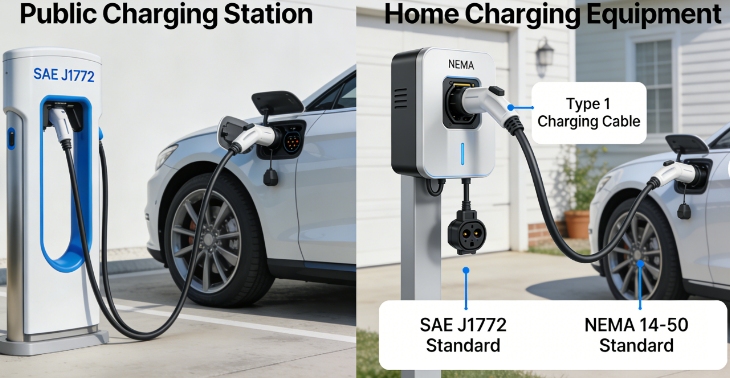
The type1 charging cable is also known as the SAE J1772 connector, primarily used in North America and Japan. It is designed for single-phase charging and is commonly found on older or region-specific electric vehicles.- Connector Design and Compatibility: The type1 charging cable features a 5-pin connector that ensures secure and stable charging. However, it is only compatible with vehicles that have a type1 inlet, meaning you cannot use it directly with type2 vehicles without an adapter.
- Charging Speed and Power: Typically, this cable supports charging speeds up to 7.4 kW, depending on the power supply and vehicle capabilities. This makes it suitable for home charging and slower public charging stations.
- Standard Usage Regions: It is mainly used in the United States, Canada, and Japan. In these areas, many charging stations are equipped to support type1 charging, but global compatibility is limited.
- Safety Features: The type1 charging cable includes built-in safety mechanisms such as locking systems and communication protocols to prevent overcharging and electrical hazards.
Compatibility with Charging Stations
Not every charging station supports a type1 charging cable, and understanding compatibility is crucial.- Public Charging Stations: In regions where type1 is standard, such as parts of North America, many public charging stations offer type1 connectors. However, in Europe and other regions, type2 is more common, making type1 less compatible.
- Home Charging Setup: Many EV owners install dedicated home chargers that are compatible with type1 cables, allowing convenient overnight charging without needing to rely on public infrastructure.
- Use of Adapters: In some cases, adapters can be used to connect a type1 charging cable to a type2 charging station, but this depends on the specific hardware and safety regulations.
- Station Availability: Even in areas where type1 is supported, not all charging stations offer the same plug type, so checking availability before charging is necessary.
Advantages of Using a Type1 Charging Cable
The type1 charging cable offers several advantages that make it a practical choice for certain users.- Ease of Use: Its simple plug-and-play design makes it easy for EV owners to connect and disconnect without complicated setup.
- Cost-Effective: Type1 cables and compatible charging stations are generally more affordable compared to newer high-power charging systems.
- Reliable for Daily Use: For users who charge their vehicles overnight, the moderate charging speed is sufficient and gentle on the battery.
- Widely Supported in Certain Regions: In markets where type1 is the standard, infrastructure is well-developed, ensuring consistent availability of charging points.
Limitations and Considerations
Despite its advantages, there are some limitations to consider when using a type1 charging cable.- Limited Global Compatibility: Since many countries have adopted type2 or CCS standards, type1 cables may not work in all regions.
- Slower Charging Speed: Compared to newer fast-charging technologies, type1 is relatively slower, which may not be ideal for long-distance travel.
- Dependence on Regional Infrastructure: Its usability heavily depends on whether the local charging stations support type1 connectors.
- Adapter Restrictions: While adapters exist, not all of them are certified or safe for long-term use, which may limit flexibility.