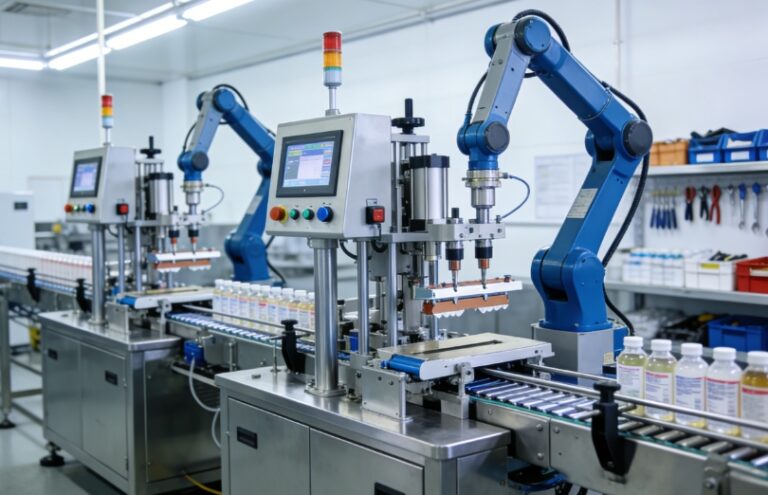
In the modern fragrance industry, a well-structured perfume production line plays a crucial role in ensuring consistent quality, efficient output, and scalable manufacturing. From small boutique brands to large-scale cosmetic manufacturers, understanding the essential equipment required in a perfume production line helps optimize production, reduce waste, and maintain product consistency. A complete system typically involves raw material handling, mixing, filtering, filling, and packaging processes. Each stage relies on specialized equipment to achieve precise formulation and elegant final presentation.
Raw Material Handling and Storage Equipment
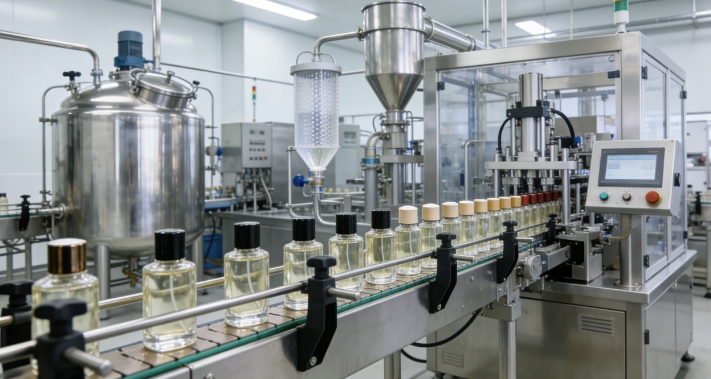
At the beginning of any perfume production line, proper storage and handling of raw materials are essential to maintain ingredient integrity.- Stainless steel storage tanks: These tanks are commonly used to store alcohol, essential oils, and fragrance concentrates. Stainless steel ensures chemical stability and prevents contamination. They are often equipped with airtight seals to minimize evaporation of volatile substances.
- Measuring and weighing systems: Accurate formulation depends on precise measurement. High-precision electronic scales and automated dosing systems are used to weigh raw materials according to the perfume formula. Even a minute deviation can affect the consistency of the fragrance.
- Transfer pumps and pipelines: To move liquids safely and efficiently between tanks and mixing units, sanitary-grade pumps are used. These systems are designed to prevent leakage, oxidation, and contamination during transfer.
Mixing and Blending Equipment
The next critical stage in a perfume production line is blending, where fragrance compounds are combined to create the final scent profile.- Mixing tanks with agitators: These tanks are equipped with stirring systems that ensure uniform blending of alcohol, fragrance oils, and additives. The speed and direction of mixing can be adjusted depending on the formulation requirements.
- Temperature control systems: Some perfumes require controlled temperature conditions during mixing to preserve delicate aromatic compounds. Heating and cooling jackets are often integrated into mixing tanks.
- Automated mixing systems: Advanced perfume production lines may include programmable logic controllers (PLCs) that automate mixing time, speed, and sequence, reducing human error and improving consistency.
Filtration and Maturation Equipment
After blending, the perfume mixture needs to be clarified and matured to enhance its quality and stability within the perfume production line.- Filtration systems: Multi-stage filtration units are used to remove impurities, sediments, and particles. Common filtration methods include microfiltration and activated carbon filtration, which help improve clarity and purity.
- Cooling and chilling units: Perfume is often cooled to low temperatures to encourage the precipitation of unwanted substances, which can then be filtered out.
- Aging tanks: Some fragrances require a maturation period, during which the scent develops and stabilizes. These tanks are designed to store the product under controlled conditions for a specified time.
Filling and Capping Equipment
The filling process is one of the most important stages in a perfume production line, as it directly affects product accuracy and packaging quality.- Liquid filling machines: These machines are designed to fill bottles with precise volumes of perfume. They can be volumetric or gravity-based and are often equipped with anti-drip nozzles to prevent waste.
- Automatic capping machines: Once filled, bottles move to capping units that securely seal the containers. This ensures product integrity and prevents leakage or evaporation.
- Conveyor systems: Bottles are transported through different stages using conveyor belts, improving workflow efficiency and reducing manual handling.
Labeling and Packaging Equipment
The final stage of a perfume production line focuses on presentation and market readiness.- Labeling machines: These machines apply labels accurately and consistently onto perfume bottles, ensuring brand identity and regulatory compliance.
- Shrink wrapping and sealing machines: To protect products during transportation, packaging machines wrap bottles in protective film or cartons.
- Cartoning and boxing systems: Finished perfumes are placed into boxes, often with automated systems that improve speed and reduce labor costs.