It is possible to grow a lemon tree even if there is no big garden available. The pot may be put on a sunny balcony, patio, or near a sunny window. It is necessary to provide enough room for the root system and branches of the tree, as well as drainage and watering.
The growth process will depend on the surrounding conditions. Lemon tree needs much light and warmth, while the roots require soil that will not stay moist for a long time. It is very important to choose the right pot, especially in case of indoor and balcony growth. If all of these needs are provided, then it is easier to take care of the tree and get the proper foliage, flowers, and fruits.
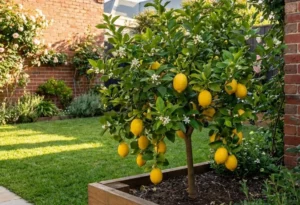
1. Select the Correct Location for your Lemon Tree
In order to provide proper growth of the lemon tree, it needs to get a certain amount of sunlight on a daily basis. There should be a place that receives a good amount of sunlight for several hours. In your garden, it is better to avoid planting a lemon tree next to tall walls and fences and other big plants because they may block the sunlight. It would also be better to choose a place with good air circulation, not a place with a closed corner.
When the lemon tree is planted in a pot, it becomes possible to plant it on balconies and patios that receive enough sunlight. In addition, when the lemon tree is in a pot, it is possible to move the plant to another place in case the climate is unsuitable during the winter period.
Another factor to consider before growing a lemon tree is space. The roots require sufficient space in a pot or soil, and branches require enough space to develop properly.
| Growing space |
Suitable approach |
What to consider |
| Sunny balcony |
Small or dwarf lemon tree |
Choose a stable, well-drained pot |
| Patio |
Medium container tree |
Leave room for the crown to spread |
| Backyard |
Plant directly in the ground |
Check drainage before planting |
| Bright indoor area |
Compact container tree |
Keep it close to a strong light source |
A lemon tree can also be used as part of a simple landscape. Instead of surrounding it with many plants, place it beside a garden path, seating area, or outdoor table. The tree itself can become a natural focal point.
2. Get Watering and Soil Right
Lemon trees require moist conditions but cannot have soaking wet roots. This rule is crucial for pots that lack drainage, as the water will accumulate inside the pot without having anywhere to flow.
One should not stick to a watering schedule, but rather pay attention to weather changes and soil conditions. For instance, a pot can dry much quicker in the heat compared to a cooler week. One should inspect the soil and assess its moisture level.
The following tips will help one to avoid most of the common mistakes:
- Select a pot that allows drainage.
- Water the plant when the soil has begun to dry rather than keep it constantly moist.
- Ensure that the tree receives a sufficient amount of water to reach its roots.
- Drain any accumulated water from a tray below the pot.
- Inspect the containers more often during hot weather.
- Do not place the pot in an area where water accumulates due to rain.
It is important to consider the type of soil. A soil type that is loose enough to allow water movement through the pot but also provides the roots with oxygen is ideal for growing a potted lemon tree.
If planting outdoors, the same concept applies. Inspect the land after rainfall. If water stands on the planting site for an extended period of time, consider improving drainage or planting somewhere else.
3. Adjust Care to the Local Climate
Depending on your local climate, there can be an optimal method of growing a lemon tree. A gardener living in a warm climate can easily leave his tree outside almost all year round. Someone who is living in a cooler climate may find it necessary to place his tree in a pot and save it from freezing temperatures.
Moreover, seasonal changes will affect the watering schedule and the amount of light your tree receives. While a lemon tree, which needs regular watering during the warm summer season, does not need such thorough watering during winter months, plants growing indoors will have less light because of short days.
The process of moving a lemon tree grown in a pot may become your regular routine. However, you should try not to make sudden moves. After all, a plant that has been growing indoors for quite a long time may need some adaptation before spending a lot of time under the burning sun.
It is the same with designing your garden. Choose those plants that fit the environment you have.
4. Keep the Tree Healthy With Regular Checks
It is not necessary to give daily care to your lemon tree, as a few minutes can be enough to do a lot. Check the leaves, soil, and the process of new growth development.
If there is yellowing, leaf falling, dryness of the soil, or poor new growth development, this means that the growing conditions have to be improved. It is not necessary to make changes to all conditions at once. If the soil is too wet, you should start with watering and drainage adjustments and not with additional fertilizing at once.
Fertilization may help if the growth process is active, but fertilization should be done in accordance with the manufacturer's recommendations.
Simple, low-waste habits can also be part of lemon tree care:
- Reuse suitable garden compost to improve soil.
- Use natural mulch around outdoor plants to slow moisture loss.
- Water the root area instead of wetting the whole garden.
- Check leaves for pests before choosing a treatment.
- Remove dead or damaged plant material when needed.
- Collect rainwater for garden use where it is practical and permitted.
Gardens need not be complicated or extravagant to be healthy. On the contrary, planting plants in ample amounts of space and selecting plants that thrive in the area’s climate could make it easier to manage the garden.
Having lemon trees in the garden could give it more character throughout different seasons of the year. The blooming flowers of these trees will give a new appearance during the summer season, while their fruits will give another type of color.
5.Conclusion
Lemon trees can be planted with health benefits provided that certain factors about their surroundings are taken into consideration. Such factors include the availability of sunlight, appropriate soil, proper irrigation practices, and protection from unsuitable weather conditions, which can greatly affect their growth. There are many ways of providing a good environment for lemon plants depending on the place you live in, and therefore, there is no universal procedure.
Even small lemon trees are possible to grow on a balcony, and large lemon trees may be grown in the backyard garden. When a plant is suitable for the climate of a region, gardening becomes easier. What is more, when such things as water-saving, composting, and unnecessary treatments are used, it becomes helpful not only for nature but also for those who live at home.
0