In the renewable energy industry, terms like “PV module” and “solar panel” are often used interchangeably, which can create confusion for buyers and beginners. While both refer to devices that convert sunlight into electricity, there are subtle technical differences in definition and usage. Understanding these distinctions is important when selecting products for residential, commercial, or industrial solar projects. A professional PV module manufacturer typically uses precise terminology to describe its products, helping customers better understand system design and performance expectations.
What Is a PV Module?
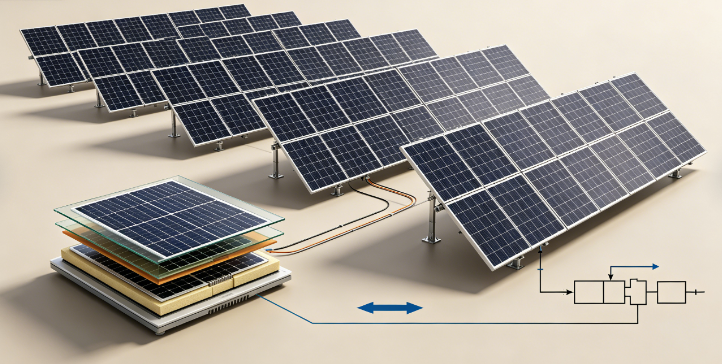
A PV (photovoltaic) module is the fundamental building block of a solar power system:- Composition of multiple solar cells A PV module consists of interconnected photovoltaic cells that convert sunlight into direct current (DC) electricity. These cells are usually made from silicon materials such as monocrystalline or polycrystalline silicon.
- Encapsulation and protective layers The cells are sealed within layers of glass, EVA (ethylene-vinyl acetate), and a backsheet to protect against moisture, dust, and mechanical stress. This structure ensures durability and long-term performance.
- Standardized electrical output unit Each module is designed to deliver a specific voltage and power output, making it a standardized component for building solar arrays.
What Is a Solar Panel?
The term “solar panel” is often used in a broader or more general context:- Commonly used as a general term In everyday language, a solar panel usually refers to a single PV module. However, in some contexts, it may also describe a group of modules connected together.
- Public and commercial usage differences Installers, marketers, and consumers often prefer the term “solar panel” because it is easier to understand, even though “PV module” is technically more accurate.
- Functional similarity Regardless of terminology, both a PV module and a solar panel perform the same function—converting sunlight into usable electricity for various applications.
Key Differences Between PV Module and Solar Panel
Although they are closely related, there are a few distinctions worth noting:- Technical vs general terminology “PV module” is a precise engineering term used in manufacturing and system design, while “solar panel” is a more general term used in everyday communication.
- Scope of definition A PV module specifically refers to a single unit of interconnected solar cells, whereas “solar panel” can sometimes refer to a collection of modules depending on context.
- Industry-specific usage Professionals such as engineers and a PV module manufacturer typically use “PV module” for clarity, especially in technical documentation and product specifications.
Why the Distinction Matters in Solar Projects
Understanding the difference can help improve decision-making in solar installations:- Accurate system design and planning Using the correct terminology ensures better communication when calculating system capacity, wiring configurations, and layout design.
- Product specification comparison Buyers can more easily compare efficiency, power output, and durability when they clearly understand what constitutes a module versus a larger panel system.
- Improved supplier communication When working with suppliers or a PV module manufacturer, using precise terms helps avoid misunderstandings and ensures that the correct products are selected.
How to Choose the Right Solar Components
When selecting solar equipment, it is important to consider more than just terminology:- Evaluate efficiency and performance ratings Look for modules with high conversion efficiency and low degradation rates to maximize long-term energy output.
- Check material quality and certifications High-quality products typically meet international standards such as IEC and ISO, ensuring safety and reliability.
- Consider application requirements Residential rooftops, commercial installations, and utility-scale projects may require different module types, sizes, and configurations.