
The 24F MTP trunk cable is widely used in fiber optic backbone networks due to its high-density design, plug-and-play structure, and strong scalability. It plays an important role in improving network performance while simplifying deployment and maintenance in large-scale optical systems.
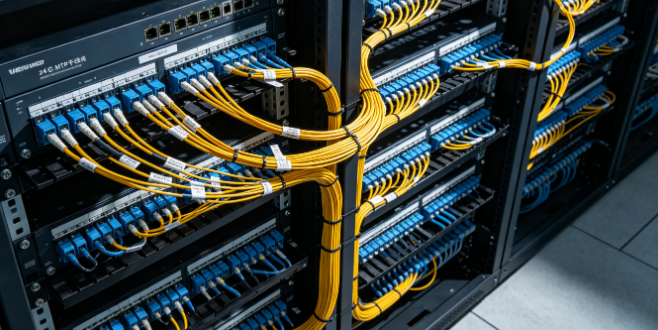
High-Density Transmission Capability for Backbone Networks
One of the most important advantages of the 24F MTP trunk cable is its ability to support high-density fiber transmission within a compact structure. Fiber backbone networks often require large numbers of connections, and managing them individually can be complex and inefficient.- The 24-fiber configuration allows multiple channels to be transmitted simultaneously in a single cable, improving bandwidth efficiency
- Compact design reduces physical space usage in cable trays and distribution panels, which is critical in dense backbone environments
- Supports parallel optical transmission, making it suitable for high-speed applications such as 40G, 100G, and beyond
Simplified Deployment and Faster Installation Process
Deployment speed is a critical factor in large-scale fiber backbone construction. The 24F MTP trunk cable is designed with pre-terminated MTP connectors, which significantly simplify installation procedures. First, factory pre-termination ensures consistent quality and eliminates the need for on-site fiber splicing or polishing. Second, plug-and-play connectivity allows technicians to deploy connections quickly by simply linking standardized interfaces. Finally, reduced installation steps minimize human error and improve overall deployment reliability. These advantages make it possible to complete backbone network installation in a shorter time frame while maintaining high accuracy and performance standards.Improved Network Organization and Maintenance Efficiency
Fiber backbone networks often involve complex routing structures, making maintenance and troubleshooting challenging. The 24F MTP trunk cable helps address this issue by improving overall cable organization and structure.- Structured fiber grouping: Multiple fibers are bundled into a single trunk, reducing cable clutter and improving visual organization in racks and panels
- Easier fault identification: Clear and consistent routing paths allow engineers to quickly locate and diagnose connection issues
- Reduced maintenance disruption: Organized cabling minimizes the risk of accidental disconnection during repair or upgrade activities
Enhanced Scalability for Expanding Network Demands
As data consumption continues to grow, fiber backbone networks must be able to scale efficiently. The 24F MTP trunk cable supports flexible expansion, making it suitable for evolving infrastructure requirements. For example:- Additional trunk cables can be integrated without redesigning the existing network architecture
- Compatible with modular patch panels and high-density fiber systems, allowing gradual capacity upgrades
- Supports future migration to higher bandwidth standards without full cabling replacement
Cost Efficiency and Long-Term Operational Benefits
Beyond performance, the 24F MTP trunk cable also delivers strong economic advantages for backbone network deployment and operation.- Reduced installation time lowers labor costs during large-scale projects
- Improved cable management decreases maintenance expenses and troubleshooting time
- High-density design minimizes the need for additional physical infrastructure, saving space-related costs