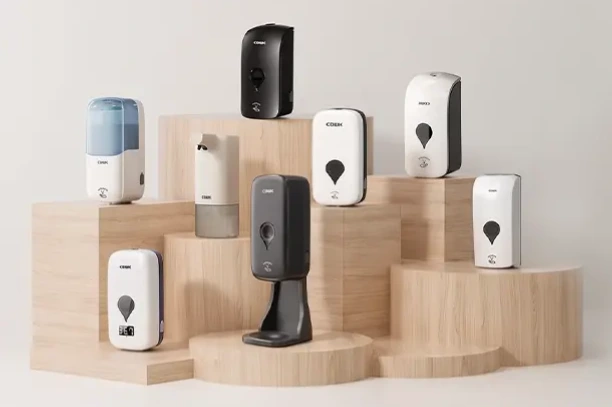
As hygiene standards have evolved, hotels, hospitals, offices, shopping malls, and public washrooms have increasingly adopted automatic soap dispensers. Importers, wholesalers, and private labels need to choose the right
automatic soap dispenser manufacturer to ensure product quality, reduce procurement costs, and meet consumer needs.
However, manufacturers differ in design capabilities, production capacity, customization services, and quality control systems. Price alone may not be enough to make one company better. Consumers must consider several crucial factors.
1. Product Quality and Reliability
Product quality determines the user experience, maintenance costs, and operational costs. When evaluating an automatic soap dispenser manufacturer, you need to examine sensor performance, dispensing capabilities, material quality, and structural design.
Sensor Performance and Dispensing Accuracy
Automatic soap dispensers usually use either an infrared sensor or another form of touchless technology to dispense soap. If the sensor doesn't work well, the dispensing process will be inaccurate.
Several specifications deserve attention:
- Detection distance: The range of about 5-15 cm can be used as a starting point in some cases, depending on the design of the product and the setting where the product is to be installed.
- Dispensing volume: Settings ranging from 0.5–2 mL per use can be compared to confirm the required amount is dispensed.
- Operational consistency: Check repeated dispensing to identify leaks or other problems.
Materials and Structural Design
ABS resin offers design flexibility and low production cost, whereas stainless steel provides durability and a visually appealing look.
Also check the seals in the reservoir, pump assembly, battery compartment, and other replaceable parts. The dispenser should be easy to clean and refill.
2. Product Range and Application Requirements
The environment determines the required dispenser capacity, mounting system, power source, and dispensing technique. An efficient automatic soap dispenser manufacturer will provide dispensers that fit into the buyer’s environment.
Matching Products to Usage Scenarios
| Application |
Key considerations |
| Hotels and offices |
Appearance, reliability, convenient refilling |
| Healthcare facilities |
Cleanability, hygienic operation, maintenance |
| Shopping centers and public restrooms |
Durability, capacity, service efficiency |
| Homes and small businesses |
Compact design, simplicity, affordability |
Reservoir capacity should reflect expected demand. For example, a 500 mL dispenser may suit some low- to medium-traffic locations, while 1,000 mL or larger models may reduce refill frequency in busier facilities. Actual requirements depend on daily user numbers and the volume dispensed per activation.
Checking Soap Compatibility
The dispensers can be customized for liquid soap, foam soap, or spray formulations. The design must accommodate the dispensing method and may also have specific viscosity requirements.
When buying a dispenser, check the supported formulations, viscosity range, refilling procedure, and container compatibility. This information will help minimize operating expenses.
3. OEM, ODM, and Customization Capabilities
Customization is especially essential for businesses producing private-label products or extending their product line. A good automatic soap dispenser manufacturer should meet brand specifications while ensuring consistent product performance.
Understanding OEM and ODM Services
- OEM: This often involves manufacturing based on existing designs or customer specifications, including customizing things like printing logos, modifying packaging, and making specific specification changes.
- ODM: This usually includes more advanced design and development services, such as improving appearance, structure, and functionality.
Before starting a project, establish MOQs, sample lead times, tooling charges, and development fees.
Evaluating Custom Projects
Before ordering in bulk, request drawings, technical information, packaging details, and product samples. In cases where custom molds and unique designs have been developed, determine intellectual property rights and processes for future changes to the design.
This helps avoid misunderstandings during product launches.
4. Production Capacity and Delivery Reliability
Good production planning keeps customers free from stock shortages, launch delays, and unreliable product quality. When analyzing an automatic soap dispenser manufacturer, evaluate its production, quality control, sourcing, and order management processes.
Key factors include:
- Lead time: Ensure the projected lead times for standard and special orders are known.
- Production capacity: Confirm the supplier can provide samples, bulk orders, and reorders.
- Quality control: Ask about inspections at the entry stage, during processing, and on finished products.
- Supply chain stability: Understand how critical components are sourced and how shortages are managed.
For large orders, buyers can set inspection and delivery standards, along with procedures for handling defective goods, in the purchasing agreement.
5. Certifications and Market Compliance
Products available in various countries should meet applicable electrical safety, electromagnetic compatibility, material, and environmental standards, depending on the product's nature, power supply, destination, and other factors.
A competent automatic soap dispenser manufacturer should provide relevant documentation for purchase.
Before confirming an order, verify:
- Certification documents: Check certificate numbers, validity, issuing organizations, and covered product models.
- Electrical requirements: Verify requirements for powered dispensers and external power supplies.
- Material compliance: Examine the appropriate limitations and environmental requirements of the market.
- Labels and instructions: Ensure that labeling, warnings, and instructions comply with local regulations.
Always validate certification claims rather than take them on faith. Doing this assessment before manufacturing will minimize customs clearance and market-entry problems.
6. After-Sales Support and Long-Term Partnership
Even high-quality dispensers may require replacement and support at times. Over time, you may face issues such as malfunctioning sensors, broken pumps, battery problems, and leaks.
An experienced automatic soap dispenser manufacturer should have a clear process for warranty claims, spare-part supply, and technical support.
Establishing Clear Service Terms
Before signing a contract, clarify:
- Period of warranty and conditions covered under warranty and not covered.
- Availability of replacement parts and lead times.
- Procedures for reporting problems and resolving defects in products.
- Responsibilities for repairs, replacements, and quality disputes.
For ongoing purchase processes, consider whether the vendor can ensure product availability, communicate specification changes, and help develop future products. Good service minimizes equipment downtime and helps distributors handle complaints.
Conclusion
Selecting an appropriate automatic soap dispenser manufacturer requires a careful balance of factors, including product quality, applicability, customization capability, production reliability, regulatory compliance, and after-sales service. Potential buyers should first define their customers and requirements, then evaluate manufacturers based on samples, documentation, and production capacity.
Price matters; however, it should not be the only criterion. An ideal manufacturer offers quality, clear communication, customization options, and strong production capability. By following these criteria, companies can reduce procurement risks and increase procurement effectiveness.
0