Share:

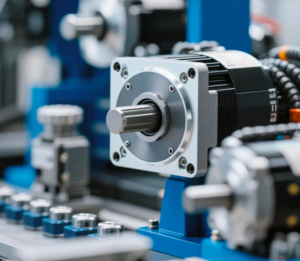
Industrial servo motors play a crucial role in modern manufacturing and automation processes. These motors are designed to provide precise control of angular or linear position, velocity, and acceleration in a wide range of industrial applications. Industrial servo motors are commonly used in robotics, CNC machinery, conveyor systems, and automated production lines. Their accuracy, responsiveness, and reliability make them indispensable in industries where precision and efficiency are paramount. Industrial Servo Motors
Key Features of Industrial Servo Motors

  • Precision and Accuracy
One of the primary characteristics of industrial servo motors is their ability to offer highly precise motion control. Unlike standard motors, industrial servo motors use feedback mechanisms, such as encoders or resolvers, to continuously monitor their position and adjust accordingly. This ensures that movements are accurate, even under varying load conditions, making them ideal for tasks such as robotic arm positioning and CNC milling.
  • Speed and Torque Control
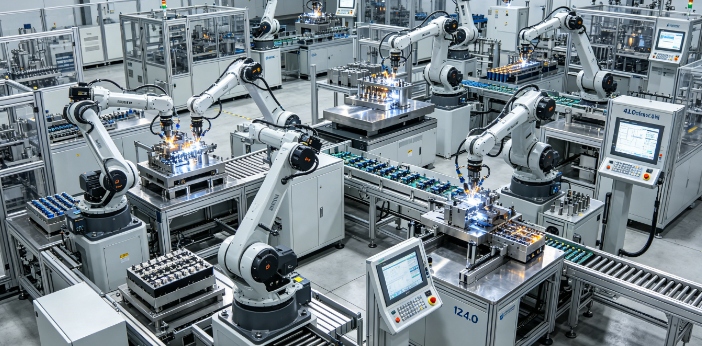
Industrial servo motors provide exceptional speed and torque control. By adjusting the electrical input, these motors can maintain a consistent speed or torque output, even when the load changes. This capability allows manufacturers to maintain production quality and prevent mechanical wear. In assembly lines, for example, industrial servo motors can synchronize multiple processes, reducing errors and improving efficiency.
  • Durability and Reliability
Industrial servo motors are designed to operate in harsh industrial environments. They are often equipped with robust casings, high-temperature insulation, and vibration-resistant components. These features ensure long-term reliability and reduce maintenance needs. Industries such as automotive manufacturing, aerospace, and electronics heavily rely on industrial servo motors to maintain uninterrupted operations.

Applications of Industrial Servo Motors

  • Robotics and Automation
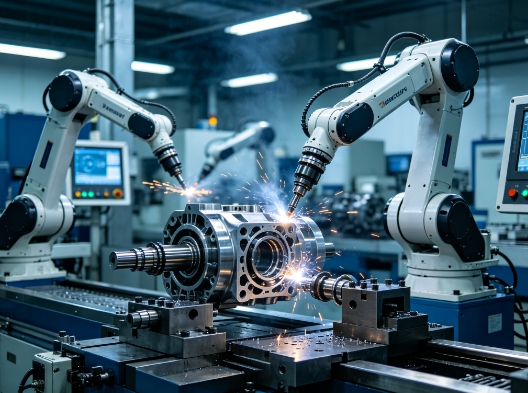
In robotics, industrial servo motors enable precise movement and positioning. Robots used for welding, painting, or material handling depend on servo motors to perform intricate tasks with minimal error. The integration of industrial servo motors in robotic arms allows for smooth, repeatable motions, enhancing both productivity and safety.
  • CNC Machines and Tooling
Computer Numerical Control (CNC) machines rely on industrial servo motors to achieve high-precision cutting, drilling, and milling. The motors’ feedback systems allow machines to maintain exact dimensions, even when processing complex materials. This ensures superior product quality and reduces material wastage.
  • Conveyor Systems and Material Handling

Industrial servo motors are also widely used in conveyor systems and automated material handling equipment. They allow for precise speed adjustments, smooth starting and stopping, and accurate positioning of packages or components. These motors help optimize workflow and reduce bottlenecks in warehouses and production facilities.

Advantages of Using Industrial Servo Motors

The adoption of industrial servo motors provides several advantages, including enhanced precision, reduced energy consumption, improved production consistency, and lower maintenance costs. Their ability to deliver controlled motion in demanding environments makes them essential for modern manufacturing. Additionally, industrial servo motors support integration with advanced control systems, including programmable logic controllers (PLCs) and industrial Internet of Things (IIoT) devices, enabling smart factory implementations.

Conclusion

Industrial servo motors are vital components in today’s high-tech manufacturing landscape. Their precision, speed control, durability, and versatility make them suitable for a wide range of applications, from robotics to CNC machinery and conveyor systems. As industries continue to pursue automation and efficiency, the role of industrial servo motors is set to become even more significant, driving innovation and productivity across various sectors.0

Featured Articles

Filling Machine Manufacturer
What Types of Equipment Does a Filling Machine Manufacturer Offer?
Solar wafers
What Are Solar Wafers?
micro fiber cable
Why Is Micro Fiber Cable Important for Stable Wi-Fi Connections?
panel
How Do Solar Photovoltaic Panels Work in Everyday Energy Systems?
kongzhi
How Does a Traffic Light Control System Really Work?
pv module manufacturer
How to Choose the Right PV Module Manufacturer for Your Project?