
LEDs work on an electroluminescence principle, where a semiconductor device generates light every time an electric current passes through it.
Compared to the traditional incandescent light bulb, where electricity is used to warm up the filament to produce light, LEDs drive a high percentage of the electric current into light. This produces highly efficient lighting with minimal heat dissipation.
The efficiency of LEDs also makes them suitable for use in traffic lights as they emit highly bright, consistent light without high power consumption compared to halogen or incandescent bulbs.
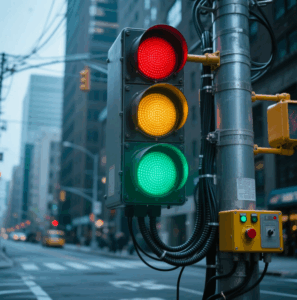
Parts of an LED Traffic Light
There are certain very crucial parts of an LED traffic light that are unavoidable to its operation:- LED Modules – They are diode arrays meant to emit red, yellow, or green light. One module is a series of diodes for balanced brightness in the signal face.
- Lenses and Optics – Lenses gather and direct light to enhance visibility for drivers. Innovative optics are designed to reduce glare and enhance signal readability, even during inclement weather.
- Signal Housing – The housing guards the LEDs against rain, dirt, vibration, and vandals. Housings are typically made of hard materials like polycarbonate or aluminum for durability and reliability.
- Control Circuitry – Electronics manage the timing, order, and brightness of the LED lamps. Advanced control units can be integrated into adaptive traffic management systems such that signals can react immediately to dynamic traffic conditions.
Energy Efficiency
LED traffic signals are highly energy efficient compared to traditional lighting infrastructure. An LED traffic light would consume 80% less power than an incandescent bulb, and the importance of that is substantial cost savings for municipalities. LEDs emit virtually no heat, meaning very little energy loss, and the parts themselves last longer. In addition to saving municipalities money, reduced energy consumption also equates to reduced greenhouse gas emissions, and traffic infrastructure itself is thus in alignment with environmental sustainability objectives.Integration with Traffic Management Systems
Modern LED traffic lights are not isolated devices; they typically form part of intelligent traffic management systems. Traffic flow, speed of vehicles, and pedestrian flow are monitored using sensors, and the control unit can adjust the timing of lights dynamically.- For example, during peak hours, green time can be increased on main roads during peak periods, easing the flow and reducing congestion.
- LED traffic lights also possess an emergency vehicle priority program so that ambulances, fire departments, and police cars are able to pass through roads without any kind of disturbance and smoothly.
- LEDs and intelligence together provide safety and traffic efficacy.
Advantages of LED Traffic Lights Over Traditional Traffic Lights
- Instant On – LEDs turn on immediately, rendering the delay of incandescent bulbs obsolete. This quick response enhances driver reaction time when driving through intersections.
- Long Service Life – LEDs last more than 50,000 hours, much more than ordinary bulbs. This minimizes the maintenance need and avoids loss of signal.
- Constant Light – Incandescent lights whose intensity of light may decline over time are not like LEDs that emit constant light throughout their life.
- Weather Resistance – LED traffic lights operate normally in sub-freezing temperatures, rain, snow, and fog with unobstructed visibility and safety at all times.