Monstera is one of the most popular indoor plants that people keep in their houses, offices, cafes, and hotels. Its tropical appearance brings a touch of color and liveliness into the usual interior style, while special notches make this plant very unique and beautiful. But what is more important, Monstera can be grown under different indoor conditions if its requirements are met.
But in order to take care of this plant, it is not enough to water it from time to time. Various climatic conditions such as temperature, light, humidity, and changes of season affect its growth. So it is necessary to know how these climatic factors vary in different areas.
1. Why Is Monstera a Great Choice for Indoor Green Spaces?
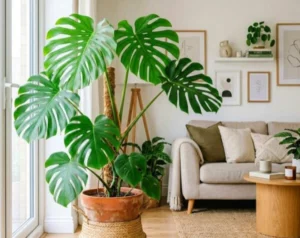
This plant originated from the tropical region of Central America. Here, Monstera develops in creeping habitats. In an interior, it may grow into a decorative plant and become a giant green decoration. This opportunity to grow is what makes this plant special.
Small Monstera plants may be used for decorating a plant stand or a place near a window. In the future, it will occupy a blank space in the corner and become an accent piece for the interior. This foliage looks great with wood, stone, and rattan.
It is not difficult to provide the proper care for the plant. This plant does not require much attention; however, it likes bright indirect lighting but does not appreciate too hot midday sun. Moreover, it needs warm and humid conditions. Monstera should be watered according to the condition of the soil, not according to the calendar.
The topsoil should dry out before it is watered again, if there is good drainage in the pot. This is especially true in case of changing seasons. A plant will need more water in summer than in winter.
2. From the UK to the US: How Should Monstera Be Cared for in Different Climates?
The same Monstera can need very different care depending on where it is grown.
| Region |
Seasonal Conditions |
Care Tips |
| UK |
Cooler temperatures and less daylight in autumn and winter |
Reduce watering and keep the plant away from cold drafts |
| Northern US |
Cold winters and dry indoor heating |
Avoid cold windows and very dry areas |
| Southern US |
Warmer temperatures and stronger sunlight |
Provide filtered light and good drainage |
| Warm, humid areas |
Longer growing periods and higher humidity |
Watch for excessive moisture and poor airflow |
Autumn in the UK will bring shorter days and colder weather. The speed of growth of the Monstera will slow down, which means that the soil should stay wet but not all the time. Getting the plant closer to sunny windows will compensate for the decrease in quality of sunlight, and you should water it less often if the soil stays wet longer.
Northern parts of the USA represent yet another situation. The outdoor temperature can become much lower than a tropical plant can stand. In this case, your Monstera grown in the pot needs to be moved indoors before it gets really cold. It needs to be sheltered from cold airflow and heat coming from the radiator.
Conversely, in warmer areas, you may face the opposite problem. The sunbeams can burn the leaves of the plant, although they are very necessary for it.
The bottom line is simple – pay attention to your Monstera and to the environment in which it grows, and not to the schedule of care.
3. How Can Monstera Be Used in Different Spaces?
Monstera is also useful as a landscaping element because its size and shape can change the feeling of a space.
| Space |
Placement |
Design Idea |
| Living room |
Empty corners or beside furniture |
Use a mature plant as a focal point |
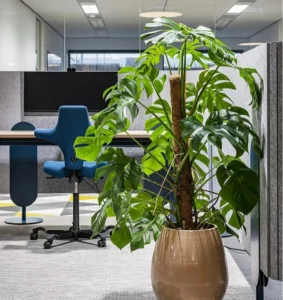
| Office |
Near windows or lounge areas |
Add greenery without taking up desk space |
| Café |
Along walls or near seating |
Combine with smaller plants |
| Hotel lobby |
Large floor containers |
Create a welcoming natural feature |
| Balcony |
Sheltered areas |
Mix different plant heights |
The biggest error made by most people is that of filling up all corners with plants. It would be better for one healthy and well-shaped Monstera to have more effect than several unhealthy and disarranged plants.
The height factor should come in handy when making layers in your home décor. You may use a tall Monstera to serve as the backbone plant while other smaller plants will serve as filler for the lower layer.
In the case of smaller spaces, you can consider using smaller varieties of Monstera. The important thing to note here is that the size of the plant should tally with the space in which it will grow and not the other way round.
4. Caring for One Plant Can Also Be a Greener Habit
Plant cultivation can relate to the conservation of the environment by making certain simple decisions on a day-to-day basis.
For instance, water usage can be considered. Overwatering a Monstera plant does not accelerate its growth. It might cause the roots to remain soaking in water, as well as wasting water. Before watering plants, it is always better to examine the soil to avoid wasting resources.
Additionally, the plant containers can be reused if they are still fit for planting. New Monstera plants can be cultivated using cuttings of healthy stems of such plants. Therefore, there will be no need to keep purchasing other pots.
There are larger opportunities for conserving the environment while cultivating plants outdoors. This includes the choice of plants that naturally survive in the local climatic conditions. In case there is low rainfall in a particular region, drought-resistant plant varieties would be ideal.
A greener space does not have to be complicated. A well-positioned plant, a reused container, sensible watering, and a suitable choice of species can all contribute to a more sustainable approach to gardening.
5. Conclusion
It’s easy to see why Monstera is such a sought-after plant. Its unique foliage may alter the atmosphere of a room, and the plant can thrive in houses, offices, hospitality environments, and commercial interiors.
Yet, its care may vary based on the conditions in which the plant is placed. A Monstera cultivated through a cold winter in the UK will require a different approach than a Monstera kept in a warm area of the United States. Temperature, light, humidity, and moisture content of the soil are much more helpful factors to consider than sticking to a regimen regardless of the circumstances.
In general, gardening can become an example of how one should live sustainably. Selecting appropriate plants, conserving water, recycling pots, and creating eco-friendly green zones can help in achieving it.
0