As urban traffic volumes continue to grow, controlling vehicle speed, reducing accidents, and improving road safety have become key priorities for cities worldwide. To address these challenges, more and more cities are installing speed limit sign with radar devices on busy roads—smart systems that display a driver’s real-time speed and remind them to slow down when necessary.
This article explains why cities value and actively deploy speed limit sign with radar, and explores their significance in modern traffic safety and road management.
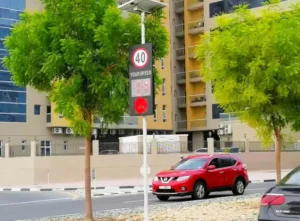
What is a speed limit sign with radar?
A speed limit sign with radar combines a standard speed limit sign with radar speed-detecting technology. It monitors the speed of approaching vehicles in real time and displays the driver’s current speed directly on the screen. When a vehicle exceeds the limit, the system flashes or highlights the speed to alert the driver to slow down. Compared with traditional static signs, this device provides interactive, real-time feedback. Making it one of the most effective non-enforcement tools for reducing driving speed.
Why Do Cities Install Speed Limit Sign With Radar on Busy Roads?
1. Effectively Reduces Speeding and Improves Road Safety
- Real-time alerts: The device displays the vehicle’s current speed instantly, allowing drivers to quickly notice and correct speeding.
- Stronger visibility: Bright, dynamic digits catch a driver’s attention more effectively than standard signs, especially when driving fast or distracted.
- Lower risk: Continuous speed feedback helps reduce sudden braking, rapid acceleration, and other unsafe behaviors—important for high-traffic or accident-prone roads.
2. Significantly Reduces Traffic Accidents
- Lower accident rate: Studies show that installing speed limit signs with radar can reduce crash rates by 15–30% on major urban roads.
- Fewer speeding cases: By stabilizing overall traffic speed, the device helps reduce collisions caused by speed differences between vehicles.
- Better hazard awareness: Drivers become more attentive to crosswalks, school zones, intersections, and road conditions when seeing live speed reminders.
3. Improves Drivers’ Safety Awareness
- Stronger speed awareness: Real-time displays help drivers recognize their driving status and avoid accidental speeding.
- Better driving habits: Continuous exposure to speed reminders encourages long-term responsible driving behavior.
- Improved road safety culture: Over time, these devices influence both individual habits and the overall traffic safety mindset of a city.
4. More Friendly and Acceptable Than Ticket Enforcement
- Non-punitive reminders: The system promotes safe driving without fines or penalties, making it more acceptable and less stressful for drivers.
- No interference: It only alerts speeding drivers and does not affect those obeying the speed limit.
- Instant feedback: Drivers receive immediate warnings instead of learning about violations later through a ticket, allowing them to correct their behavior promptly.
Where are speed limit signs with radar Most Suitable for Installation?
- Main urban roads: High-traffic, high-speed areas with frequent accidents benefit greatly from these devices, which help reduce rear-end and side-impact collisions.
- Sensitive public areas: School zones, hospitals, and residential communities require stricter speed control to protect pedestrians, children, and seniors.
- Complex road environments: Curves, slopes, and areas with limited visibility increase the risk of misjudgment; radar signs prompt drivers to slow down in advance.
- Low-speed zones: Residential districts, commercial streets, and pedestrian-heavy roads use these signs to reduce unintentional speeding and avoid danger.