Melamine dinnerware has become a popular choice in homes, restaurants, cafeterias, and catering services because of its durability, lightweight structure, and attractive appearance. Many users choose melamine dinnerware as an alternative to ceramic or glass tableware due to its strong resistance to breakage and practical daily performance. However, one important concern remains for long-term users: can melamine dinnerware maintain its appearance after repeated washing? Since tableware is exposed to constant cleaning, heat, detergent, and physical contact, understanding how melamine performs under these conditions is essential for evaluating its long-term value and visual durability.
Surface Durability and Resistance to Wear
One of the main reasons melamine dinnerware maintains its appearance well is its durable surface structure, which is designed to resist common signs of wear during everyday use.- Scratch resistance in regular use: The hard outer surface helps reduce visible scratches caused by utensils, stacking, or routine handling. This allows the tableware to retain a cleaner and smoother appearance for a longer period.
- Strong stain resistance: Melamine has a non-porous surface, making it less likely to absorb oils, sauces, or food pigments compared to some other materials. As a result, stains are easier to remove during washing.
- Color stability: High-quality melamine products are manufactured with stable pigments that resist fading, helping maintain bright colors and decorative patterns even after frequent cleaning cycles.
- Protection against minor surface damage: Daily contact with water and detergents generally causes minimal visual deterioration when the tableware is properly maintained.
Effects of Dishwasher Cleaning on Appearance
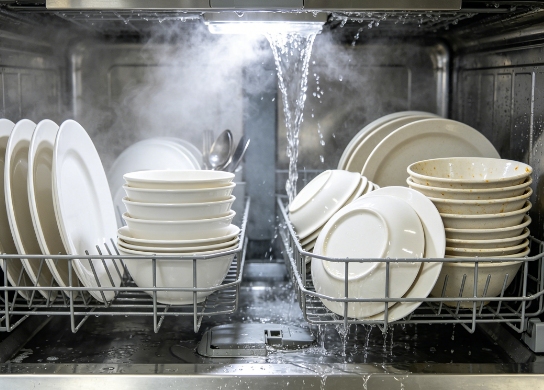
Repeated dishwasher cleaning is one of the biggest factors affecting the long-term visual condition of melamine dinnerware.Temperature Exposure
High dishwasher temperatures, especially during drying cycles, may gradually reduce surface gloss over time. While melamine is generally dishwasher safe, excessive heat exposure can accelerate dullness and minor discoloration.Detergent Strength
Strong chemical detergents or industrial-grade cleaners may slowly wear down the protective surface layer if used continuously over long periods. Mild cleaning products are usually safer for preserving appearance.Placement Inside the Dishwasher
Placing melamine dinnerware on the top rack helps reduce direct exposure to intense heat near the dishwasher heating element. This simple practice can significantly extend visual quality.Frequency of Washing
In commercial kitchens where dishes are washed many times daily, slight surface wear may appear earlier than in household use. However, high-quality products can still maintain acceptable appearance standards for extended periods. Proper dishwasher usage plays a major role in preserving the appearance and lifespan of melamine products.Factors That Help Preserve Long-Term Appearance
Several maintenance practices can help melamine dinnerware stay visually attractive after years of repeated washing.- Using soft cleaning tools: Soft sponges or non-abrasive cloths help prevent unnecessary scratches and surface damage during cleaning.
- Avoiding extreme heat exposure: Keeping melamine away from microwaves, ovens, and high-temperature sterilization systems helps maintain material stability.
- Removing stains quickly: Prompt cleaning after use reduces the chance of food residue causing long-term discoloration.
- Proper storage methods: Stacking carefully and avoiding excessive friction between dishes minimizes surface wear over time.
Comparison with Glass and Porcelain After Repeated Washing
Compared with glass and porcelain, melamine dinnerware offers different advantages and limitations regarding appearance retention.- Compared with glass: Glass maintains clarity well but is highly vulnerable to scratches, cracks, and breakage during repeated handling and washing. Melamine provides better impact resistance with lower replacement risk.
- Compared with porcelain: Porcelain offers excellent heat resistance and an elegant appearance, but its glazed surface may chip or crack after heavy usage. Melamine is more resistant to accidental damage in busy environments.
- Weight advantage: Melamine is much lighter than both glass and porcelain, reducing handling stress during washing and transportation.
- Commercial practicality: In restaurants and cafeterias, melamine often performs better because it balances appearance retention with durability and lower maintenance costs.
Signs of Aging and When Replacement May Be Needed
Although melamine dinnerware is durable, no material can maintain a perfect appearance forever under constant use.- Surface dullness: After years of repeated washing, the surface may gradually lose some shine, especially if exposed to high dishwasher temperatures regularly.
- Minor scratching accumulation: Frequent stacking and utensil contact can slowly create visible marks over time.
- Color fading in lower-quality products: Inferior manufacturing materials may lose brightness faster than premium-grade melamine.
- Structural wear warning signs: Deep cracks, severe discoloration, or rough surface texture may indicate that replacement is necessary for safety and hygiene reasons.