Industries are constantly demanding higher precision, faster production speeds, and more flexible processing capabilities. This has led to the widespread adoption of fiber laser equipment across sectors such as automotive manufacturing, aerospace engineering, electronics production, and heavy machinery fabrication. However, a key question remains: can fiber laser equipment truly handle complex industrial applications that involve intricate designs, diverse materials, and strict quality requirements? With continuous advancements in laser technology, automation integration, and software control systems, fiber laser systems have evolved into highly capable tools that can manage a wide range of demanding industrial tasks with impressive accuracy and stability.
High Precision Capability for Complex Geometries
One of the strongest advantages of fiber laser equipment is its ability to process highly complex shapes and detailed structures with exceptional precision.- Ultra-fine laser beam control: The highly concentrated beam allows for extremely accurate cutting paths, making it suitable for intricate industrial designs such as micro-components and precision parts.
- Consistent dimensional accuracy: Even when processing complex geometries, fiber laser systems maintain tight tolerances, ensuring parts meet strict engineering requirements.
- Minimal thermal distortion: A controlled heat-affected zone prevents deformation in precision structures, which is critical for complex components.
- Fine detail engraving capability: The system can produce detailed markings and patterns required in electronics, medical devices, and aerospace components.
Multi-Material Processing Flexibility in Industrial Use
Complex industrial applications often involve different types of materials, and fiber laser equipment is designed to handle a wide range of them efficiently.- Metal processing versatility Fiber lasers can effectively process stainless steel, carbon steel, aluminum, brass, and copper, making them ideal for heavy-duty industrial applications.
- Reflective material handling capability Unlike older laser systems, fiber lasers can process reflective metals with improved stability and reduced energy loss.
- Mixed-material production environments In the field of advanced manufacturing, fiber laser systems can switch between different materials without requiring significant hardware adjustments.
- Application-specific parameter adjustment Operators can fine-tune laser power, speed, and focus settings to match different material thicknesses and properties.
Automation Integration and Smart Manufacturing Support
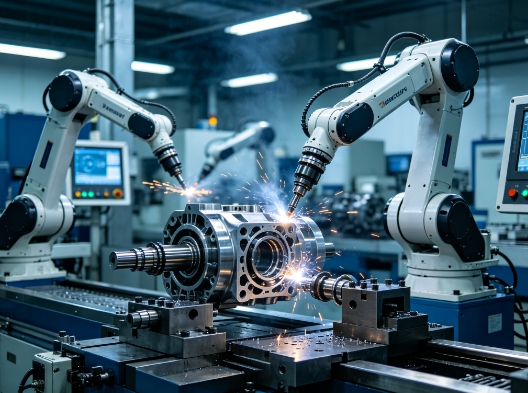
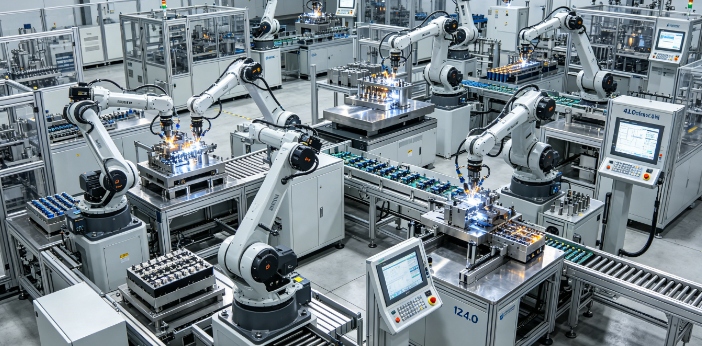
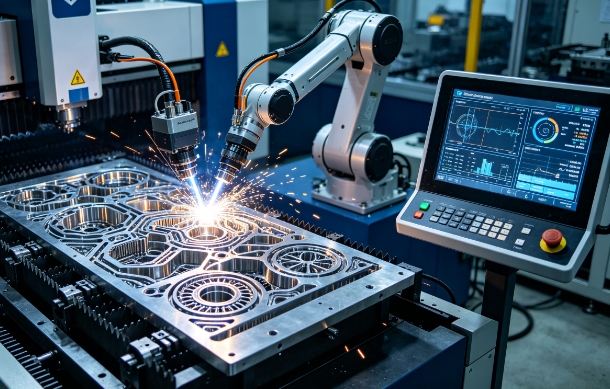
Modern industrial complexity often requires intelligent production systems, and fiber laser equipment plays a key role in enabling automation.- Robotic system compatibility: Fiber laser equipment can be combined with robotic systems to enable fully automated processes such as cutting, welding, and assembly tasks.
- CNC system synchronization: The equipment works seamlessly with CNC platforms, allowing precise control over multi-axis machining tasks.
- Real-time production monitoring: Smart software systems track performance data, helping optimize complex production workflows.
- Reduced human intervention: Automation reduces manual errors and ensures consistent output in large-scale, complex manufacturing processes.
Performance Stability in High-Demand Industrial Conditions
Complex industrial applications often require continuous operation under demanding conditions, and fiber laser equipment is designed to maintain stable performance.- Long-duration operation capability: Fiber laser systems can run for extended periods without significant performance degradation.
- High thermal stability: An efficient cooling system helps maintain stable output even during intensive production cycles.
- Low downtime design: Fewer mechanical components reduce the risk of breakdowns and production interruptions.
- Consistent beam quality: Stable laser output ensures uniform results even in high-speed production environments.
Challenges in Handling Extremely Complex Applications
Although fiber laser equipment is highly capable, there are still certain limitations when dealing with extremely complex industrial scenarios.- High initial system complexity: Advanced configurations require skilled operators for setup and optimization.
- Software dependency: Complex designs rely heavily on advanced programming and simulation tools for accurate results.
- Material-specific limitations: Some specialized materials may require additional adjustments or hybrid processing techniques.
- High precision calibration needs: During the execution of complex tasks, maintaining optimal performance may require periodic system calibration.