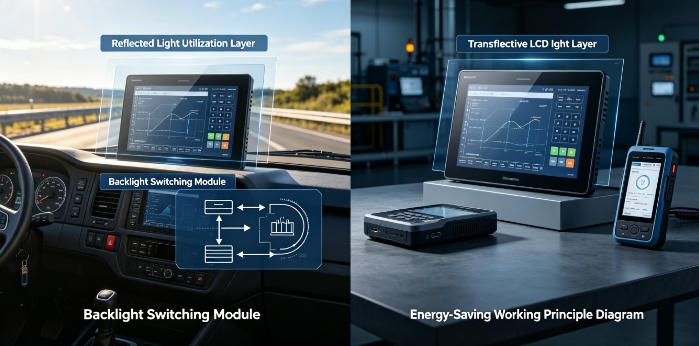
Technology has always evolved around how humans interact with machines, from keyboards and mice to voice commands and gesture-based control. Among these innovations, the Touch Display represents one of the most significant shifts in user interaction. It transforms the way people engage with digital systems by removing indirect input tools and replacing them with direct, visual interaction. Instead of controlling a cursor, users now touch, swipe, and draw directly on the screen. This fundamental change has reshaped not only personal device usage but also professional workflows, education systems, and creative industries. Understanding how a Touch Display changes interaction helps us see where digital technology is heading.
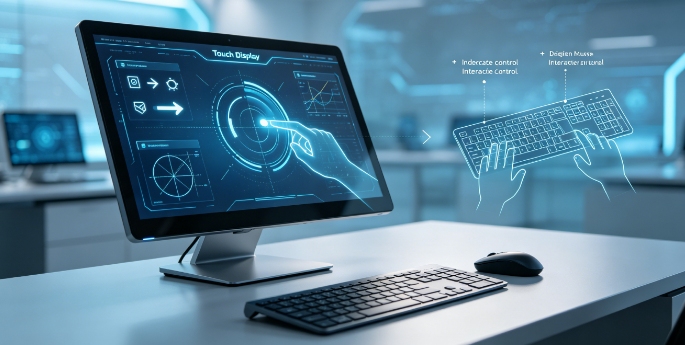
From Indirect Control to Direct Interaction
One of the most important changes introduced by a Touch Display is the shift from indirect input devices to direct manipulation of digital content.- Elimination of the cursor barrier: Users no longer need to control a pointer through a mouse; instead, they interact directly with objects on the screen.
- More intuitive physical engagement: Tapping, dragging, and swiping mimic real-world actions, making digital systems easier to understand.
- Faster response between action and result: Because input happens directly on the display, feedback feels immediate and natural.
- Reduced learning complexity for beginners: New users can quickly understand basic operations without learning keyboard shortcuts or mouse precision.
Redefining Creativity and Digital Expression
A Touch Display has also transformed creative work by offering more natural and expressive control methods.- Direct drawing and sketching experience: Artists can draw directly on screen, closely replicating traditional pen-and-paper workflows.
- Enhanced emotional expression in design: Subtle stylus pressure and tilt control allow more detailed artistic expression.
- Faster idea visualization: Concepts can be sketched, edited, and refined in real time without switching tools.
- More flexible experimentation: Creators can quickly undo, adjust, and explore different design directions interactively.
Changing Productivity and Workflow Behavior
Beyond creativity, a Touch Display also reshapes how users approach productivity and task management in daily work.- Simplified task execution: Common actions such as selecting, moving, and resizing elements become faster through touch gestures.
- Reduced dependency on keyboard shortcuts: Many basic operations can now be completed visually without memorizing complex commands.
- Improved multitasking interaction: Users can switch between apps and tools using intuitive gestures instead of manual navigation.
- More dynamic workspace control: Windows, files, and assets can be rearranged directly, creating a more flexible digital environment.
Enhancing Human-Device Relationship
The introduction of a Touch Display also changes the psychological and physical relationship between humans and technology.- More natural user engagement: Interaction feels less mechanical and more like direct manipulation of objects in the real world.
- Increased emotional connection: Users often feel more engaged and connected when physically interacting with digital content.
- Reduced abstraction in digital tasks: Instead of thinking in terms of commands, users think in terms of actions and results.
- Greater accessibility for diverse users: People with different skill levels can interact with technology more comfortably.
Challenges and Limitations in Interaction Shift
While a Touch Display improves interaction in many ways, it also introduces certain limitations that affect its overall usability.- Physical fatigue during extended use: Continuous hand movement on vertical screens may cause discomfort over time.
- Reduced precision for complex tasks: Fine control is sometimes easier with a mouse than with touch input.
- Dependence on screen size: Smaller displays can limit interaction efficiency and multitouch usability.
- Learning transition for traditional users: People accustomed to keyboards and mice may need time to adapt.