Loropetalum chinense bonsai is a highly decorative miniature plant admired for its vibrant foliage and delicate pink or purple fringe flowers. Many beginners are attracted to its elegant appearance but often struggle to maintain its health over time. Understanding the correct care techniques is essential because even small mistakes can significantly affect its growth. In fact, when caring for Loropetalum bonsai, most problems stem from improper watering, poor pruning habits, and unsuitable environmental conditions. This article explores the most common mistakes and how to avoid them when cultivating Loropetalum chinense bonsai and ensuring the long-term vitality of Loropetalum chinense bonsai.
Improper Watering Habits
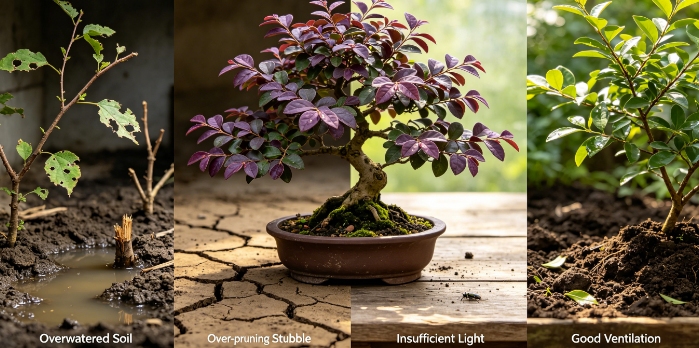
Watering is one of the most critical factors in caring for Loropetalum chinense bonsai, yet it is also where most mistakes occur. Both overwatering and underwatering can quickly weaken the plant.- Overwatering issues: Many growers keep the soil constantly wet, thinking it supports growth. However, excessive moisture can suffocate the roots, leading to rot and fungal diseases. For Loropetalum chinense bonsai, well-draining soil is essential to prevent waterlogging.
- Underwatering problems: On the other hand, allowing the soil to dry out completely may cause stress to the plants. Leaves may curl, turn brown, or drop prematurely. Consistent but moderate moisture is ideal for healthy Loropetalum chinense bonsai
- Inconsistent watering schedule: Irregular watering habits confuse the plant’s growth cycle. A stable routine helps Loropetalum chinense bonsai adapt and maintain strong root activity.
Poor Light and Soil Conditions
Light exposure and soil quality are often underestimated factors that directly influence the health of Loropetalum chinense bonsai. Many beginners place the plant in unsuitable environments without considering its natural preferences.- Insufficient sunlight exposure: Loropetalum chinense bonsai requires bright, indirect sunlight. Too little light results in weak growth, pale leaves, and reduced flowering capacity.
- Excessive direct sun: Although it loves light, the scorching midday sun may scorch its leaves. A balance of morning sun and afternoon shade is ideal for Loropetalum chinense bonsai.
- Wrong soil composition: Heavy or compact soil prevents proper drainage. A mix of organic matter, sand, and akadama-like components ensures good aeration for Loropetalum chinense bonsai
- Ignoring soil pH balance: Slightly acidic soil supports nutrient absorption. Incorrect pH levels can reduce the plant’s ability to thrive.
Incorrect Pruning and Shaping Techniques
Pruning is a key part of bonsai artistry, but improper techniques can damage the structure and long-term health of Loropetalum chinense bonsai. Many growers either prune too aggressively or too rarely.- Over-pruning branches: Cutting too many branches at once weakens the plant and slows recovery. Loropetalum chinense bonsai needs gradual shaping rather than drastic cuts.
- Ignoring growth direction: Allowing random branch growth leads to an unbalanced shape. Regular trimming helps maintain the aesthetic structure of Loropetalum chinense bonsai.
- Using unclean or dull tools: Dirty tools may introduce infections, while blunt tools create rough cuts that heal poorly.
- Pruning at the wrong season: Timing matters. Incorrect seasonal pruning can disrupt flowering cycles and weaken the plant.
Pest Problems and Environmental Stress
Another common mistake is neglecting pest control and environmental stability. Even a well-maintained Loropetalum chinense bonsai can suffer if external conditions are not properly managed.- Pest infestations: Aphids, spider mites, and scale insects often attack weak plants. Regular inspection helps prevent serious damage to Loropetalum chinense bonsai.
- Poor ventilation: Stagnant air increases the risk of fungal infections. Good airflow is necessary to maintain plant health.
- Temperature fluctuations: Sudden changes in temperature stress the plant. Loropetalum chinense bonsai prefers a stable environment without extreme heat or cold.
- Neglecting seasonal protection: In colder months, insufficient protection can lead to leaf damage or dormancy issues.