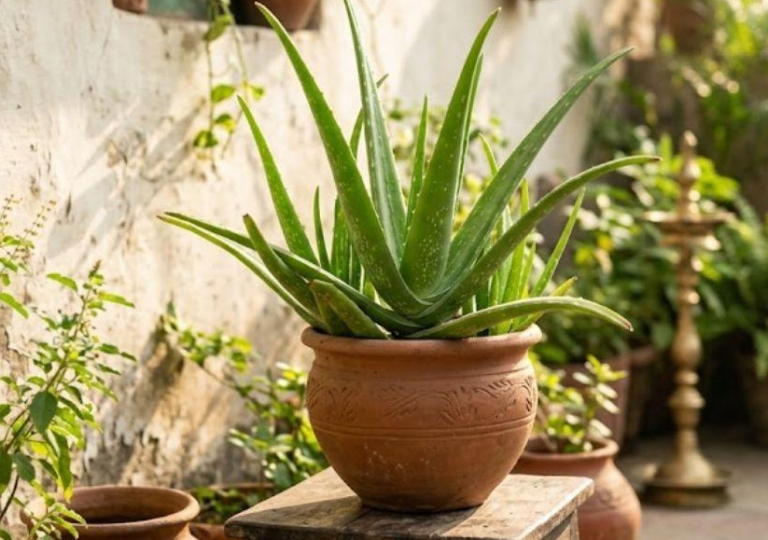
The snake plant is tolerant of changing environmental conditions inside the room. It adapts to warm rooms during the summertime and even continues to grow in cool conditions of autumn if it remains protected from the cold. Due to the fact that this plant possesses large leaves filled with water, it requires less watering compared to other ordinary indoor plants.
What one needs to do in order to care for this plant properly is to adjust their usual care, not introduce a completely different approach. During the autumn, the only aspects one should pay attention to are lower light, more humid soil, and cold night air.
What Temperature and Environment Do Snake Plants Prefer?
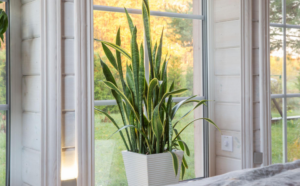
The snake plant adapts well to the typical indoor climate. The plant likes warm conditions and should be safeguarded from any cold, especially sudden temperature changes. Two snake plants placed next to each other, where one is next to an open window while the other is some distance away, will experience entirely different temperatures despite being kept in rooms of equal temperature.
There is the aspect of light as well. The snake plants thrive under low light conditions, which is the reason why they are common in offices, corners, and corridors without much sunlight. However, tolerating low light and growing in darkness are two completely different things. When the aim is the healthy development of leaves with good markings, a brighter place with indirect daylight would be preferable.
There should also be sufficient air movement. One does not have to put the plant in direct airflow; however, a damp and narrow corner is also not a good place for its placement. On the whole, a bright room with moderate temperatures, normal humidity, and good drainage will suffice for the snake plant.
How Should Snake Plant Care Change in Autumn?
The arrival of autumn does not require a long list of new chores. In fact, the most useful change is often knowing when to do less.
During a hot summer, soil can dry relatively quickly, especially when a plant is near a bright window. As temperatures fall, evaporation slows down. If the same amount of water is added on the same schedule, the soil may remain wet for much longer. Snake plants store water in their leaves and do not appreciate constantly wet roots, so checking the soil before watering is more useful than following a strict weekly routine.
These simple autumn practices will make a real difference:
- Check the soil first: Do not water just because several days have passed since the last time. If the soil is still wet, wait.
- Pay attention to the light conditions: With less daylight available, a plant may require moving closer to a sunny window.
- Be careful with drafts: A cool draft coming through a window or a door can affect the temperature of the plant's surroundings.
- Do not worry too much about dry air inside the house: Most snake plants adapt easily to standard household humidity, so you do not need to mist your plants frequently.
- Consider drainage: Water has nowhere to go if there is no good drainage system in place. Even with average watering, a fancy pot lacking drainage holes will cause issues.
Thus, autumn care is not necessarily about additional activities but about taking into account the changes that occurred. What worked perfectly fine in July does not mean anything in October anymore.
Where Can Snake Plants Be Used in Indoor Landscaping?
A snake plant also has a distinct characteristic that does not concern the way of watering – its form fits into many interiors very nicely. The leaves of the plant grow upwards and not to the sides, which allows adding the element of verticality to the room without occupying it.
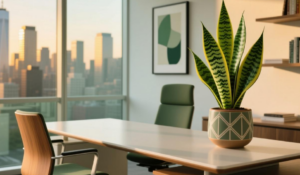
So, for example, in a living room, a taller plant will fit next to a sofa, a bookcase, or a cabinet, filling an empty space. In the office, a smaller pot will fit near a window or by a desk, taking only a small part of working space. In bedrooms, there may be a spot near a window, and in an entryway, a tall and narrow plant can fill an unused space.
| Indoor space |
Suggested placement |
Why it works |
| Living room |
Beside a sofa or cabinet |
Adds height without looking crowded |
| Office |
Near a bright window or desk |
Takes up relatively little space |
| Bedroom |
Bright corner |
Gives an empty corner a natural touch |
| Entryway |
Beside a console or cabinet |
Makes a plain entrance feel less bare |
| Larger public spaces |
Several pots at different heights |
Creates a more continuous green arrangement |
How Can Snake Plants Help Create a Low-Maintenance Green Space?
Low-maintenance gardens or green spaces begin with a reasonable selection of plants. It is much easier to take care of a plant that is already suitable for your room conditions than to always compensate for poor compatibility between the plant and the room.
In this case, snake plants will help because these plants do not require frequent watering. They have a leaf structure that allows them to store moisture in their leaves, which helps them survive while you forget to water them. Such plants can be very handy in office spaces, rented apartments, reception rooms, or homes where nobody would like to add one more obligation to their daily routine.
Moreover, there is also an environmentally friendly aspect to it. A plant that survives in its current environment will not be changed just because it is unable to adapt to usual indoor conditions. Constant buying of plants, containers, and other gardening supplies means additional consumption. It is much simpler to pick up a durable plant and use it for many years.
However, low-maintenance should not be mistaken for neglectful care either. Leaving the snake plant in a dark cupboard or soaking it in water is going to lead to some issues eventually. Even with minimal care, there is always a need to inspect the plant periodically and remove any diseased leaves. Lighting should be appropriate and adjusted as per the season and watering frequency.
Conclusion
Due to their adaptability to the conditions indoors that are far from optimal, the snake plants cope with changing seasons rather easily. Their ability to tolerate low lighting and dry soil is an additional benefit that comes with the onset of colder weather, shortening of days, and slowing of evaporation.
The solution, in fact, is very straightforward – make sure to provide adequate light, protection from the cold weather, allow the soil to dry before the next watering, and observe the process of drying. With these factors taken into account, the snake plant can survive the transition period and become a permanent fixture of the interior after summer.
0