The Variegated Ficus is a popular ornamental plant admired for its strikingly patterned leaves and elegant indoor appearance. Although it is widely grown in homes and offices, it can sometimes present challenges for plant owners, especially beginners. Issues such as leaf drop, discoloration, slow growth, and pest infestations are common when environmental conditions or care routines are not ideal. Understanding these problems and knowing how to fix them is essential for maintaining a healthy Variegated Ficus and ensuring long-term growth and visual appeal.
1. Leaf drop and sudden leaf loss
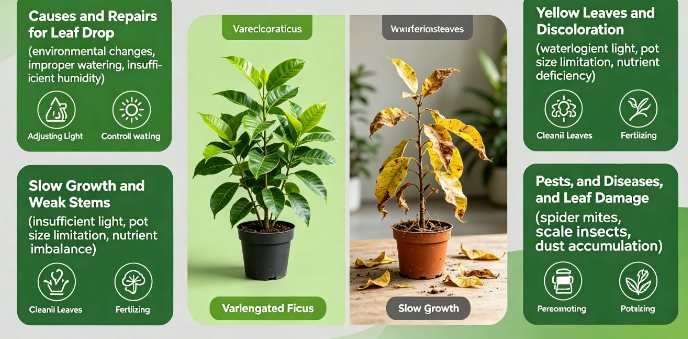
One of the most frequently reported issues with a Variegated Ficus is unexpected leaf drop, which can be alarming for plant owners.- Environmental shock from relocation: Moving the plant to a new location with different lighting or temperature conditions can trigger stress, causing leaves to fall.
- Inconsistent watering routine: Both overwatering and underwatering can disrupt the plant’s stability, leading to sudden shedding of healthy leaves.
- Low humidity or dry air exposure: Indoor heating or air conditioning systems often reduce humidity levels, which may cause the plant to lose foliage.
- How to fix it: Keep the plant in a consistent environment, limit unnecessary movement, and determine watering needs by checking soil moisture instead of following a strict timetable. Gradually increasing humidity can also help recovery.
2. Yellowing leaves and poor coloration
Yellow leaves are another common problem that can affect the appearance of a Variegated Ficus, often indicating an imbalance in care conditions.- Excess water in the soil: Poor drainage or frequent watering can suffocate roots, leading to yellowing leaves and weak growth.
- Insufficient light exposure: When the plant does not receive enough bright indirect light, its variegation may fade, and leaves may turn more green or yellowish.
- Nutrient imbalance: Lack of essential nutrients such as nitrogen or potassium can reduce leaf vitality and color quality.
- Corrective measures: Improve drainage, reposition the plant closer to a light source, and apply diluted fertilizer during the growing season to restore leaf health.
3. Slow growth and weak stems
In some cases, the Variegated Ficus may show slow development or weak structural growth, which is often linked to environmental limitations.- Limited light energy: Without sufficient light, photosynthesis slows down, reducing overall growth speed and stem strength.
- Small pot restrictions: When roots become crowded, the plant cannot expand properly, leading to stunted growth.
- Low nutrient availability: Poor soil quality or lack of fertilization can result in weak stems and small leaves.
- Improvement solutions: Provide brighter indirect light, repot the plant when necessary, and apply balanced fertilizer during active growth seasons to support healthier development.
4. Pest infestations and leaf damage
Pests can occasionally affect a Variegated Ficus, especially when indoor air circulation is poor or plant hygiene is neglected.- Pests that commonly harm Variegated Ficus include spider mites and scale insects: These pests feed on plant sap, causing leaf spots, curling, or discoloration.
- Dust accumulation on leaves: Dirty leaves reduce photosynthesis efficiency and may attract pests over time.
- Weak plant immunity: Plants under stress due to improper watering or lighting are more susceptible to pest infestations.
- Control and prevention methods: Regularly inspect leaves, wipe them clean with a damp cloth, improve airflow around the plant, and use mild insecticidal soap when necessary.