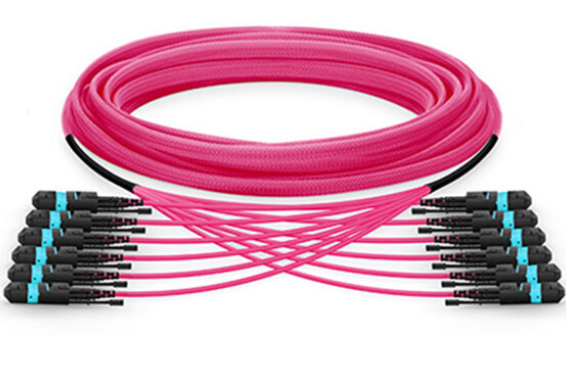
A drop fiber optic cable is the final section of a fiber optic connection that links the optical distribution network (ODN) to the subscriber’s premises. It’s called “drop” because it literally drops from poles, ducts, or terminals to reach the end user.

Structure and Materials
A drop fiber optic cable is built with precision to balance flexibility and protection. The core, where light signals travel, is made of glass or plastic fiber strands. Around it lies cladding that reflects light inward to minimize loss. This is followed by a buffer coating that prevents mechanical damage. The outer layer can vary based on the installation environment:- Indoor Drop Cable: Lightweight, flame-retardant, suitable for in-wall or conduit use.
- Outdoor Drop Cable: UV-resistant and waterproof, with added strength members like steel wires or aramid yarns.
- Aerial Drop Cable: Reinforced for pole-to-house installations, able to withstand tension and wind pressure.
Common Types of Drop Fiber Optic Cables
The term drop fiber optic cable covers several designs, each suited for specific installation scenarios:- Flat Drop Cable: The most common design, featuring two strength members on both sides of the fiber core. Ideal for aerial or duct installations.
- Round Drop Cable: Offers higher flexibility, used in indoor wiring or when routing through tight spaces.
- Armored Drop Cable: Includes a steel tape or corrugated armor for high mechanical protection, suitable for underground or outdoor harsh environments.
- Self-Supporting Aerial Cable (Figure-8): Contains a messenger wire for aerial installations between poles.
Applications in Modern Networks
Drop fiber optic cables are used in various network environments, particularly in FTTH (Fiber to the Home) and FTTB (Fiber to the Building) systems. These setups provide ultra-fast internet to homes, offices, and even remote facilities. Here are a few common application scenarios:- Residential Installations: Bringing high-speed broadband to individual households.
- Office and Commercial Networks: Reliable data transmission for cloud computing and business communication.
- Campus Networks: Connecting multiple buildings within educational or industrial zones.
- Telecom Infrastructure: Final connection points in large-scale fiber deployment projects.
Key Advantages
The growing adoption of drop fiber optic cable comes from its unique benefits:- High Bandwidth: Supports multi-gigabit speeds for video streaming, gaming, and large data transfers.
- Minimal Signal Loss: Optical transmission remains clear over distances of several hundred meters.
- Compact Design: Small diameter and light weight simplify installation and routing.
- Durability: Resistant to water, temperature change, and physical stress.
- Future-Ready: Compatible with next-generation network standards and equipment.
Installation and Handling Considerations
While drop fiber optic cables are designed for convenience, proper handling is still critical. Over-bending or stretching the cable can cause micro-bends in the fibers, leading to signal degradation. Installers should follow minimum bending radius guidelines and use protective conduits when necessary. Additionally, connectors such as SC/APC or LC are often pre-terminated to make installations faster and cleaner. Pre-terminated drop cables are becoming increasingly popular in FTTH projects, as they reduce labor time and potential connection errors.Choosing a Reliable Supplier
Choosing a dependable drop fiber optic cable supplier ensures product quality and consistency. Companies offering strong quality control, performance testing, and custom lengths can greatly improve project efficiency. Factors to consider include:- Compliance with international standards (ITU-T, IEC).
- Resistance to temperature, UV, and moisture.
- Options for pre-terminated connectors.
- Fast delivery and large-scale production capability.