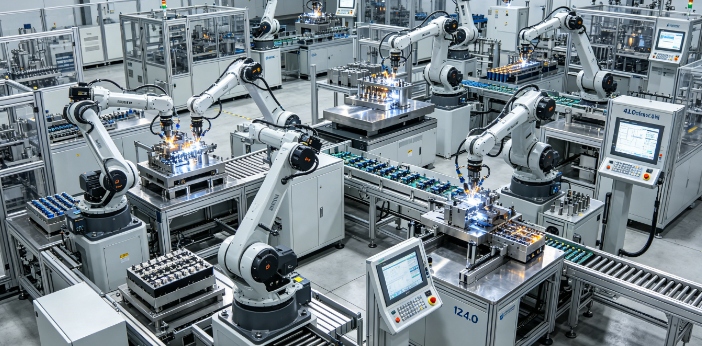
In modern automated manufacturing, companies face increasing pressure to improve production efficiency, maintain consistent product quality, reduce costs, and achieve sustainable operations. However, traditional manufacturing systems often struggle with issues such as limited flexibility, inconsistent precision, and inefficient workflows. The 5 axis robot arm has emerged as an advanced automation solution that addresses many of these long-standing challenges. With its multi-directional movement, high precision control, and intelligent operation capabilities, it plays a crucial role in solving key problems across various industrial production environments.
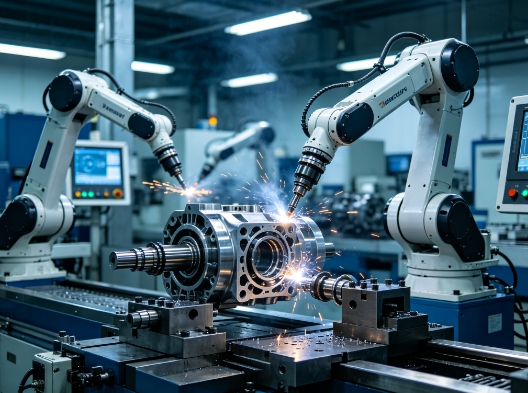
Solving Limited Flexibility in Complex Production Tasks
One of the major challenges in automated manufacturing is the lack of flexibility when handling complex or irregular product designs. A five-axis robotic arm effectively overcomes this limitation by providing advanced degrees of freedom.- It can move across multiple axes simultaneously, allowing it to reach difficult angles without repositioning the workpiece.
- This capability makes it suitable for irregular shapes, curved surfaces, and multi-angle components commonly used in modern industrial products.
- In traditional systems, multiple machines may be required for different processing angles, but the robot can complete these tasks in a single setup.
- Its adaptability allows manufacturers to quickly switch between different production tasks without extensive equipment modification.
Eliminating Inconsistent Precision and Quality Variations
Another common challenge in automated manufacturing is maintaining consistent accuracy across large production volumes. The 5 axis robot arm helps solve this issue through advanced motion control and stable repeatability.- It executes the exact same actions during every production cycle, thereby ensuring the consistency of product quality across all batches.
- High-precision servo systems enable extremely fine control over positioning and tool orientation.
- Integrated feedback mechanisms continuously monitor performance and correct deviations in real time.
- It mitigates the effects of environmental factors and mechanical wear—factors that often lead to variations in traditional systems.
Reducing Inefficient Multi-Step Production Processes
Traditional manufacturing often involves multiple separate steps, leading to inefficiencies, longer production cycles, and higher operational complexity. The 5 axis robot arm helps streamline these processes.- It combines multiple operations such as cutting, welding, and assembly into a single automated workflow.
- Workpieces do not need to be repositioned repeatedly, reducing handling time and alignment errors.
- Optimized motion planning enables seamless transitions between operations, reducing idle time during production cycles.
- Production lines become more compact and efficient due to reduced dependency on multiple machines.
Addressing High Labor Dependency and Operational Costs
Labor cost and workforce dependency remain major challenges in many manufacturing industries. The 5 axis robot arm provides an effective solution by reducing manual involvement in production.- It can operate continuously without fatigue, reducing the need for shift-based human labor.
- Repetitive and physically demanding tasks are fully automated, improving workplace safety and efficiency.
- Companies can reallocate workers to higher-value roles such as system monitoring and quality inspection.
- Reducing human intervention can also lower training costs and minimize operational errors.
Improving Stability and Reducing Downtime in Automation Systems
Unplanned downtime and system instability are critical challenges in automated manufacturing environments. The 5 axis robot arm helps improve operational stability through intelligent control and predictive capabilities.- Smart monitoring systems detect potential mechanical issues before they lead to failures.
- Coordinated multi-axis control reduces mechanical stress and extends equipment lifespan.
- Smooth motion planning minimizes vibration and sudden load changes during operation.
- Integration with digital factory systems allows real-time performance optimization and maintenance scheduling.